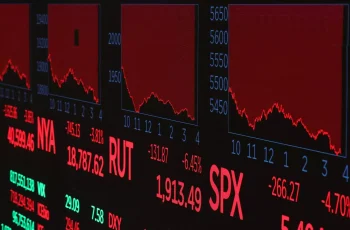
In recent months, U.S. stock markets have experienced significant volatility, prompting a wave of concern among retirement savers. Rising trade tensions, political uncertainty, and economic instability have fueled investor anxiety. Following the imposition of reciprocal tariffs, the S\&P 500 dropped nearly 10%, underscoring the fragility of equities in the face of external shocks. Many retirement-focused investors are now reconsidering their exposure to stocks, choosing perceived safety over potential growth in a turbulent financial environment.

The Flight to Safety
Data from March indicates a noticeable exodus from large-cap U.S. equity funds, with retirement accounts alone seeing outflows of \$548 million. Target-date funds, which gradually adjust risk levels based on the investor’s retirement timeline, experienced withdrawals totaling \$329 million. Investors are gravitating toward perceived safe havens such as stable value funds, money market funds, and bond funds, which saw inflows of \$245 million and \$178 million, respectively.
This shift reflects the urgent desire to protect retirement savings from short-term losses. However, financial experts warn that reactive decisions driven by fear can carry long-term consequences. Moving too quickly into low-risk instruments can hinder portfolio growth, particularly when inflation erodes the purchasing power of stagnant cash or conservative investments.
Inflation and the Illusion of Safety
Stable value and money market funds appeal because of their perceived security and competitive yields. For instance, some money market funds recently offered annualized returns exceeding 4%, making them attractive compared to underperforming equities. Yet these instruments often fail to keep pace with inflation, which steadily reduces real purchasing power. Savers focusing solely on stability may inadvertently stall retirement growth, leaving them underprepared for future financial needs.
While low-risk funds provide short-term protection during market turbulence, they do not offer the compounding growth that equities typically deliver over decades. Investors must carefully balance immediate security with the long-term necessity of portfolio growth, particularly to preserve retirement income and lifestyle.
Long-Term Strategy and Market Cycles
A critical lesson for retirement savers is understanding market cycles. Historically, stock markets experience fluctuations, but downturns are often followed by recoveries. Exiting equities prematurely may result in missed opportunities when markets rebound, reducing lifetime returns. Maintaining a diversified portfolio, including both growth-oriented assets and protective investments, is essential for long-term stability.
Target-date funds offer a structured approach to retirement investing, automatically adjusting equity exposure as retirement nears. These funds help balance risk and growth, providing a disciplined strategy for long-term wealth accumulation. Retirement savers should resist emotional reactions to market declines and instead focus on consistent, well-planned investment strategies that align with their financial goals.
Combining Safety and Growth
Retirement planning requires a dynamic approach that balances security with growth potential. Stable value funds can offer a cushion during turbulent market phases, but overreliance may compromise long-term portfolio growth. Equities remain critical for building wealth over decades, and completely abandoning them could jeopardize retirement security.
Investors should also consider bonds, which provide steady income and lower volatility while complementing equities during uncertain times. By thoughtfully allocating assets across stocks, bonds, and stable instruments, retirement savers can protect themselves from short-term market shocks without sacrificing future growth.
Additionally, investors should be aware that the right balance of risk and reward may change as market conditions evolve. Regular portfolio rebalancing, periodic assessments of risk tolerance, and diversification across sectors can help investors maintain their strategy while navigating volatility.
Avoiding Knee-Jerk Reactions
Financial advisors stress the importance of avoiding impulsive investment decisions. Market volatility is inevitable, and emotional responses often exacerbate financial risk. Savers who exit equities during downturns may struggle to reinvest at optimal times, potentially missing critical growth opportunities.
Instead, a disciplined approach—consistently reviewing portfolios, monitoring long-term objectives, and rebalancing assets—ensures that retirement investments remain aligned with overall goals. Investors who maintain a diversified strategy are better positioned to withstand market turbulence and capitalize on eventual recoveries.
Conclusion
The current financial climate has prompted many retirement savers to reconsider stock market exposure, seeking security in stable value funds, bonds, and money market instruments. While these options offer short-term protection, overreliance may hinder long-term growth and fail to keep pace with inflation.
A balanced approach that combines growth and safety is essential for long-term retirement security. Diversification, strategic use of target-date funds, and disciplined investment planning can help savers navigate market volatility while pursuing wealth accumulation. Patience, informed decision-making, and a focus on long-term objectives remain the most effective strategies for protecting and growing retirement wealth.
By maintaining a dynamic portfolio that adapts to market conditions while keeping sight of future goals, investors can safeguard their retirement against both immediate risks and long-term economic challenges.